
Food parks.
Several small food businesses, one set of shared facilities and systems. Each business stays owned by the person who runs it.
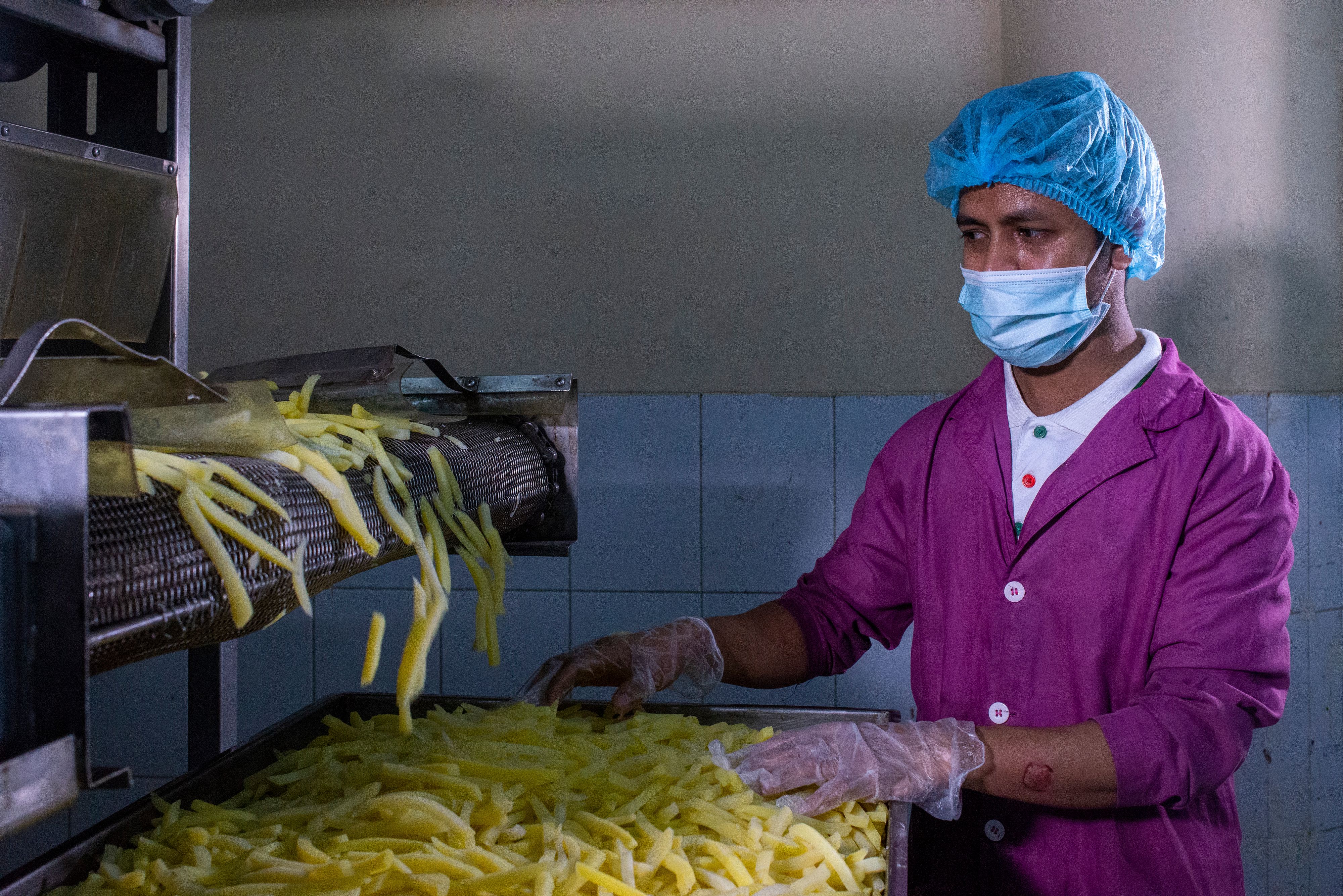
What a food park is.
A FARMiliarity food park doesn’t have to be a big industrial estate, and we don’t have to own it. It’s a group of food businesses working from shared infrastructure, in a building the community already has or one we help find.
We don’t need to own the park to make it work.
What the businesses can share.
- Processing machinery and production space.
- Storage and packaging.
- Quality control and technical help.
- Training, licences and paperwork.
- Buying raw materials together.
- Branding, marketing, sales channels and distribution.
Where a park can start.
- An existing food-processing unit or industrial building.
- A group of entrepreneurs.
- A farmer or FPO initiative.
- An SHG cluster or community initiative.
- A location we identify, or a partnership with a local institution.
Selling what the park makes.
Many small food businesses can make a good product but can’t sell it reliably. So we’re building sales channels the park businesses can use: direct sales, retail, institutions, online, distributors, corporate buyers, group purchasing and regional markets.
Products we sell have to meet set quality and operating standards. We help each business reach them, and keep checking through training, monitoring and audits.
Where we work.
We’re based in Bengaluru and starting in Karnataka, but the model isn’t tied to one place. A park can start anywhere there’s a workable group of entrepreneurs, a local resource and a market for what they make.